

Views: 0 Author: Site Editor Publish Time: 2026-01-12 Origin: Site


Many food manufacturers want to enter the breakfast cereal market but face a common problem: they don’t know how to properly launch a cereal production line. This lack of understanding often leads to incorrect equipment selection, uncontrolled investment costs, and unstable product quality. If this issue isn’t addressed early on, fixing it later can be both costly and time-consuming.
This article will break down the process into clear and practical steps, explaining how to launch a To establish a breakfast cereal production line in a feasible and manageable way, manufacturers must define the cereal type, select the appropriate processing method (such as extrusion or flaking), determine production capacity, design a hygienic plant layout, and work with a reliable turnkey equipment supplier. A standard cereal line includes mixing, extrusion, shaping or flaking, drying, coating, cooling, and packaging, ensuring consistent quality, food safety compliance, and efficient long-term operation.

As competition intensifies and food safety regulations grow stricter, understanding how to build a cereal production line has become essential. Delays in planning can lead to higher costs, longer time to market, and reduced competitiveness. That’s why manufacturers must take this matter seriously from the very beginning.
The first step in establishing a breakfast cereal line is to clearly define the product. Manufacturers must decide whether to produce cornflakes, puffed cereals, filled cereals, mixed cereals, or functional cereals. Each product type requires different processing techniques and equipment configurations.
Once the product type is determined, the basic steps include process design, equipment selection, capacity planning, plant layout design, installation and commissioning, and operator training. Skipping or rushing any of these steps can lead to low efficiency and inconsistent product quality. Therefore, a structured and systematic approach is crucial for a smooth project launch.
A complete breakfast cereal production line consists of multiple interconnected machines designed for continuous and hygienic operation. Key equipment typically includes raw material handling systems, batching and mixing machines, extrusion systems, shaping or flaking machines, dryers, ovens or toasters, coating and seasoning systems, cooling conveyors, and packaging machines.
The specific equipment list depends on the type of cereal and the production capacity. For instance, puffed cereals primarily rely on twin-screw extruders, while traditional cornflakes require rolling and flaking equipment followed by toasting. Equipment must be selected to match the formula and target output.
Breakfast cereal production follows a standardized industrial process designed to control texture, moisture content, and taste. The process usually starts with raw material preparation, where grains and additives are precisely weighed and blended. The mixture is then extruded under controlled temperature and pressure conditions.
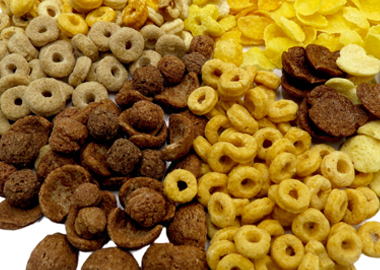
After extrusion, the product is shaped into flakes, puffs, rings, or other forms. It then undergoes drying to reduce moisture and extend shelf life. Baking or toasting enhances flavor and crispiness. Finally, before cooling and packaging, coatings such as sugar, honey, chocolate, or vitamins can be applied. Each step must be strictly controlled to ensure consistent product quality.
The cost of launching a cereal line depends on several key factors, including production capacity, level of automation, product complexity, energy requirements, and packaging integration. Small-scale lines have lower investment requirements and are suitable for startups or market testing. Medium-scale lines are often used by regional manufacturers, while large automated lines are designed for high-volume industrial production.
In addition to equipment costs, manufacturers must factor in installation, utilities, labor, training, spare parts, and trial production expenses. A sound budget should account for both upfront investment and ongoing operational costs to ensure long-term profitability.
Space requirements depend on production capacity and equipment layout. However, planning should go beyond just the size of the machines. A smart plant layout must consider material flow, hygienic zoning, maintenance access, storage areas, and future expansion needs.
A well-designed layout improves operational efficiency, reduces labor needs, and lowers contamination risks. Poorly planned layouts can lead to bottlenecks, increased downtime, and higher operating costs.
Yes, a well-designed breakfast cereal line can produce a variety of cereals. This flexibility is made possible through adjustable processing parameters, interchangeable molds, and modular equipment design. Manufacturers can switch product shapes, densities, and coatings with minimal downtime.
Multi-product capabilities are especially valuable for manufacturers serving private label clients or export markets, as product diversity enhances competitiveness and expands market reach.
Breakfast cereals are regulated food products, and production lines must meet food safety and quality standards. Equipment should be made from food-grade materials and designed for easy cleaning and sanitization. Process control systems must ensure stable product quality and traceability.
Meeting international standards not only ensures regulatory compliance but also builds customer trust and supports long-term business growth, especially in export markets.
The time needed to launch a cereal line depends on project complexity. The full process usually includes engineering design, equipment manufacturing, shipping, installation, commissioning, training, and trial production.
In most cases, the entire process takes several months to over a year. Early planning and working with an experienced turnkey supplier can significantly reduce delays and startup risks.
A turnkey cereal line means the entire project is managed by a single supplier, covering process design, equipment installation, and operator training. This approach minimizes coordination issues between multiple suppliers and ensures all machines work together as a unified system.
For manufacturers new to cereal production, turnkey solutions greatly reduce technical risk, shorten launch time, and improve overall project reliability.
Setting up a breakfast cereal production line is a complex industrial project that requires careful planning and expert execution. Manufacturers must define their product positioning, select the right processing methods, plan capacity and layout effectively, and work with a trusted equipment supplier. If all these factors are well managed, the cereal line can deliver consistent quality, controlled costs, and long-term profitability. Early planning is the foundation of successful and sustainable cereal production.
If you're planning to launch or upgrade a breakfast cereal production line, the most critical step is early technical confirmation. Decisions made during this phase directly impact investment costs, product quality, and long-term operational efficiency.
If you're considering a cereal production project, get in touch with us. We can provide:
• Customized production line solutions based on your target capacity
• Preliminary process flow diagrams and plant layout plans
• A complete list of equipment with technical specifications
• Estimated investment budget and delivery timeline
Contact email: arrow@znmachinery.com